The Difference Between Mono-facial and Bi-facial Solar Panels

In the world of solar panel technology, two noteworthy types are Mono-facial (or single-sided) panels and Bi-facial panels. Mono-facial panels are designed to absorb sunlight and generate electricity only from the front side, while Bi-facial panels can capture sunlight from both the front and rear sides, enabling them to produce more electricity under the right conditions.

Structurally, both types of panels share similar core components: an aluminum frame, a front glass cover, and a backsheet typically made from polymer materials. However, Bi-facial panels distinguish themselves by featuring a transparent or semi-transparent rear side—usually made of glass or another translucent material—allowing reflected sunlight from the ground or nearby surfaces to reach the rear solar cells. This dual-sided exposure can increase energy output by approximately 5–30%, depending on environmental factors and installation design.

In terms of application, Mono-facial panels are suitable for standard rooftop installations or areas where minimal light is reflected from below. Conversely, Bi-facial panels perform best when installed over reflective surfaces such as white concrete, gravel, or elevated mounting systems that allow light to reach the rear side.

Bi-facial solar panels represent an advanced technology aimed at boosting energy generation through dual-sided light absorption. They are particularly effective in environments that maximize rear-side illumination, offering increased energy yield compared to Mono-facial panels within the same installation footprint.

Section Title

Thailand’s Solar Power Sector at a Structural Turning Point in 2026

Thailand’s recent developments in the solar energy sector may appear fragmented at first...

Provincial Waterworks Authority Visits West Coast Engineering Co., Ltd.

On 21 November 2025, West Coast Engineering Co., Ltd. (WCE) had the honor of welcoming an executive...

E-Fuels: The Energy Bridge to a Low-Carbon Future

As the world races to cut carbon emissions, millions of cars, airplanes, and ships still depend on...

Thailand’s Climate Change Act: A Landmark Law Every Business Must Know

Thailand is advancing the Draft Climate Change Act, commonly referred to as the “Climate Change...

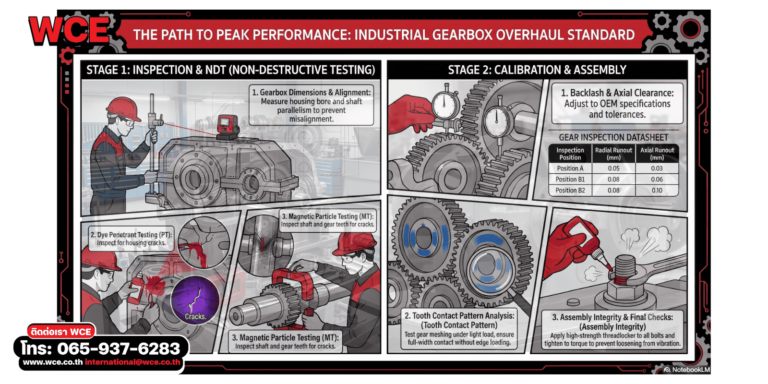
Overhauling Planetary Gear Systems for Industrial Machinery

Planetary gear sets in industrial machinery or heavy equipment are gear systems designed so that...

Solar-Powered & EV Charging in Thailand

As electric vehicles (EVs) continue to rise as the star of the automotive world, the EV Charger has...

You May Also Like:

No Posts Found!

✉️

Purchasing Department : phaiboono@wce.co.th   |   Human Resources and Administration Department : hrmwce@wce.co.th   |   Sales Department : international@wce.co.th

Headquarters Bangkok

16 K&Y Building 5 Fl., Surasak Road, Silom Sub-District, Bangrak District, Bangkok, 10500
Mobile Phone +66 (06) 5937 6283 
Fax +66 (0) 2233 6669

Factory Bang Saphan

9/1 Moo 4, BanKlangNa – YaiPloy Road, Maerumphueng, BangSaphan, PrachuapKhiriKhan 77140
Telephone +66 (0) 3290 6112 – 119
Fax +66 (0) 3290 6120