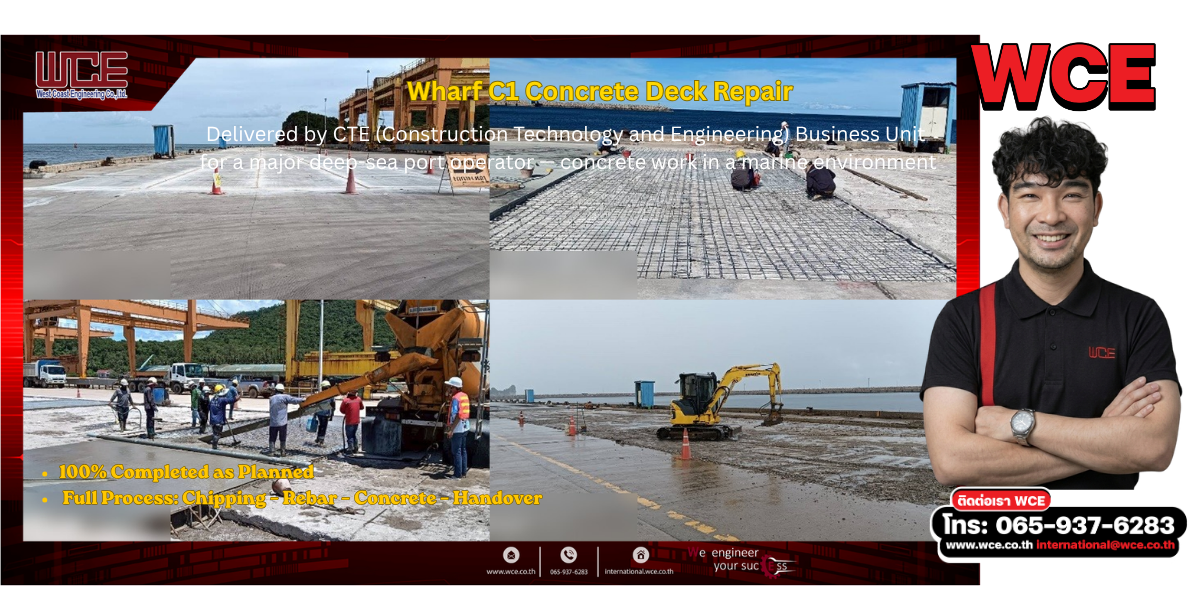
A wharf’s concrete deck carries enormous loads from machinery and cargo. At the same time, it faces a constantly aggressive marine environment. When the surface deteriorates, repair means more than pouring new concrete over the top. Instead, it requires structural engineering, proper reinforcement management, and materials suited to marine conditions. This article first explains the principles and process of wharf concrete deck repair. It then presents a real project reference from WCE’s CTE business unit.
Coastal concrete deteriorates faster than normal because several factors act together. The most important is chloride attack from seawater and salt spray. Chlorides penetrate the concrete and cause rebar corrosion. As the rust expands, it cracks and spalls the concrete. In addition, heavy loading and abrasion from port operations add wear. Finally, the wet–dry cycling of the tides speeds up both surface and structural damage.
Several signs show that a wharf deck needs repair. These include spreading cracks, spalled concrete that exposes corroded rebar, pits and potholes in the surface, and localized settlement. Early assessment and repair stop the damage from spreading into the main structure. As a result, the wharf lasts longer.
First, the team inspects the extent and severity of surface and reinforcement damage. This defines the areas to remove, the chipping depth, and the amount of steel to replace.
Next, the team chips away cracked and deteriorated concrete down to sound material. This exposes the existing rebar for inspection. Throughout this step, the team controls the work so it does not affect the main load-bearing structure.
Then, the team cleans or replaces corroded rebar. After that, it ties new reinforcement to the engineering drawings. Finally, it installs formwork to control the shape and level of the area to be cast.
The team places quality concrete with a mix suited to marine work. Meanwhile, it controls pouring, vibration, and surface leveling. As a result, the concrete consolidates without voids.
Proper curing helps the concrete reach its specified compressive strength. It also reduces shrinkage cracking. Finally, the team checks quality and hands the area back for safe return to service.
Marine concrete work should use mixes with high chloride resistance and low permeability. In addition, it needs controlled compressive strength and adequate concrete cover to protect the steel from corrosion. The work should follow recognized concrete and concrete-repair standards, such as those of the ACI (American Concrete Institute). Equally important, quality control of materials and workmanship must cover every stage.
Wharf repairs often take place in areas that must still support port operations. For this reason, teams face limited space, marine weather, and the need to minimize disruption. Therefore, phased work planning and waterside safety management are key to success.
WCE’s CTE (Construction Technology and Engineering) business unit repaired the Wharf C1 concrete deck for a major deep-sea port operator. The project covered the full process: chipping out old concrete, tying reinforcement, installing formwork, placing concrete, and curing and handover.
The team followed structural engineering principles with quality control at every stage. In addition, it finished all work within the scheduled window, from 13 February to 31 July 2026.
This project shows WCE’s readiness to deliver construction and concrete-structure repair. It especially highlights our durability expertise in marine environments and our ability to work within an operating facility.
WCE provides construction and concrete-structure repair, infrastructure works, and end-to-end civil engineering. Our experienced engineers and technicians support you from on-site assessment through handover and after-service support.
📞 Tel: +66 65-937-6283 | 📧 Email: international@wce.co.th | 🌐 Website: www.wce.co.th
We engineer your success.