
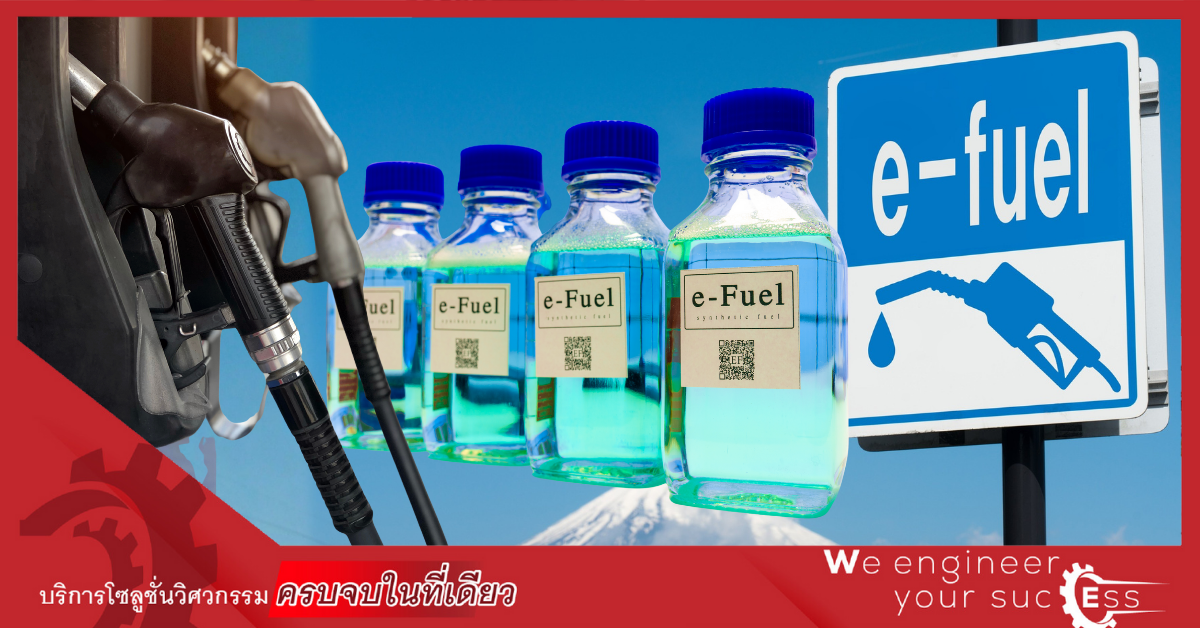
As the world races to cut carbon emissions, millions of cars, airplanes, and ships still depend on fossil fuels. E-Fuels, also known as electrofuels, are emerging as a vital “energy bridge” — linking today’s fossil-fuel era to tomorrow’s clean-energy future.
What Are E-Fuels and How Do They Work?
E-Fuels are synthetic fuels produced through chemical processes powered by renewable energy. Their core principle is simple yet transformative: using clean electricity to create carbon-neutral liquid fuels.
The production process typically involves three main steps:
1. Using Green Electricity – Renewable power from solar or wind energy is used to split water (H₂O) into hydrogen (H₂) through electrolysis.
2. Capturing Carbon – The hydrogen is then combined with carbon dioxide (CO₂) captured either from the atmosphere or from industrial sources.
3. Producing Synthetic Fuel – This reaction forms synthetic hydrocarbons such as methanol, diesel, or gasoline, which have the same chemical properties as conventional fuels — meaning they can be used immediately in existing engines and distribution systems.
Why E-Fuels Matter: The Key Advantages
E-Fuels offer an immediate path to decarbonization without requiring massive infrastructure changes.
· Carbon-Neutral Combustion: The CO₂ emitted when E-Fuels are burned is equal to the amount of CO₂ captured during production, achieving net-zero emissions.
· Compatibility with Existing Infrastructure: E-Fuels can be used in current vehicles, factories, and fuel-distribution networks without engine modification or new logistics systems.
· Ideal for Hard-to-Electrify Sectors: For aviation, shipping, and heavy-duty transport, where battery electrification is still technically challenging, E-Fuels provide a practical low-carbon alternative.
Challenges and Limitations
Despite their potential, E-Fuels face several key challenges before they can scale commercially:
· High Production Costs: Current costs are around USD 3–5 per liter, roughly three to five times higher than conventional fossil fuels, making them economically uncompetitive without policy support or carbon pricing.
· Energy Efficiency Losses: The process of converting renewable electricity into E-Fuels involves multiple conversion stages, resulting in significant energy loss. Compared with direct electrification (e.g., battery EVs), the overall energy efficiency of E-Fuels remains relatively low.
The Future Outlook: From Pilot Projects to Global Adoption
Although E-Fuels are still in the early stage of commercialization, they are gaining global momentum. Countries such as Germany, Chile, and Japan are investing heavily in pilot plants to demonstrate large-scale production and supply-chain feasibility.
In the long term, as renewable-energy capacity expands and carbon prices increase, production costs are expected to decrease, paving the way for wider adoption in aviation, marine, and industrial sectors.
E-Fuels are therefore not a replacement for all energy solutions, but rather a complementary technology that plays a crucial role during the energy transition period — particularly for hard-to-abate sectors where full electrification is not yet practical.
Conclusion
E-Fuels represent a powerful tool in the global effort toward decarbonization. By leveraging renewable electricity and captured CO₂, they enable the continued use of existing engines and fuel infrastructure — while dramatically reducing carbon emissions.
Though cost and efficiency challenges remain, rapid advancements in technology, policy incentives, and international collaboration suggest that E-Fuels will soon become a key enabler of the low-carbon energy future.
They are not just an alternative fuel, but a strategic bridge connecting today’s fossil-fuel systems to a cleaner, more sustainable world.
